Sustainability × Space Call for Ideas is now open!

Hero banner announcing 'Sustainability × Space Ideation Workshop' with ESA, Phi-Lab NET and PSI logos, Earth graphic and decorative space icons in deep blue background.

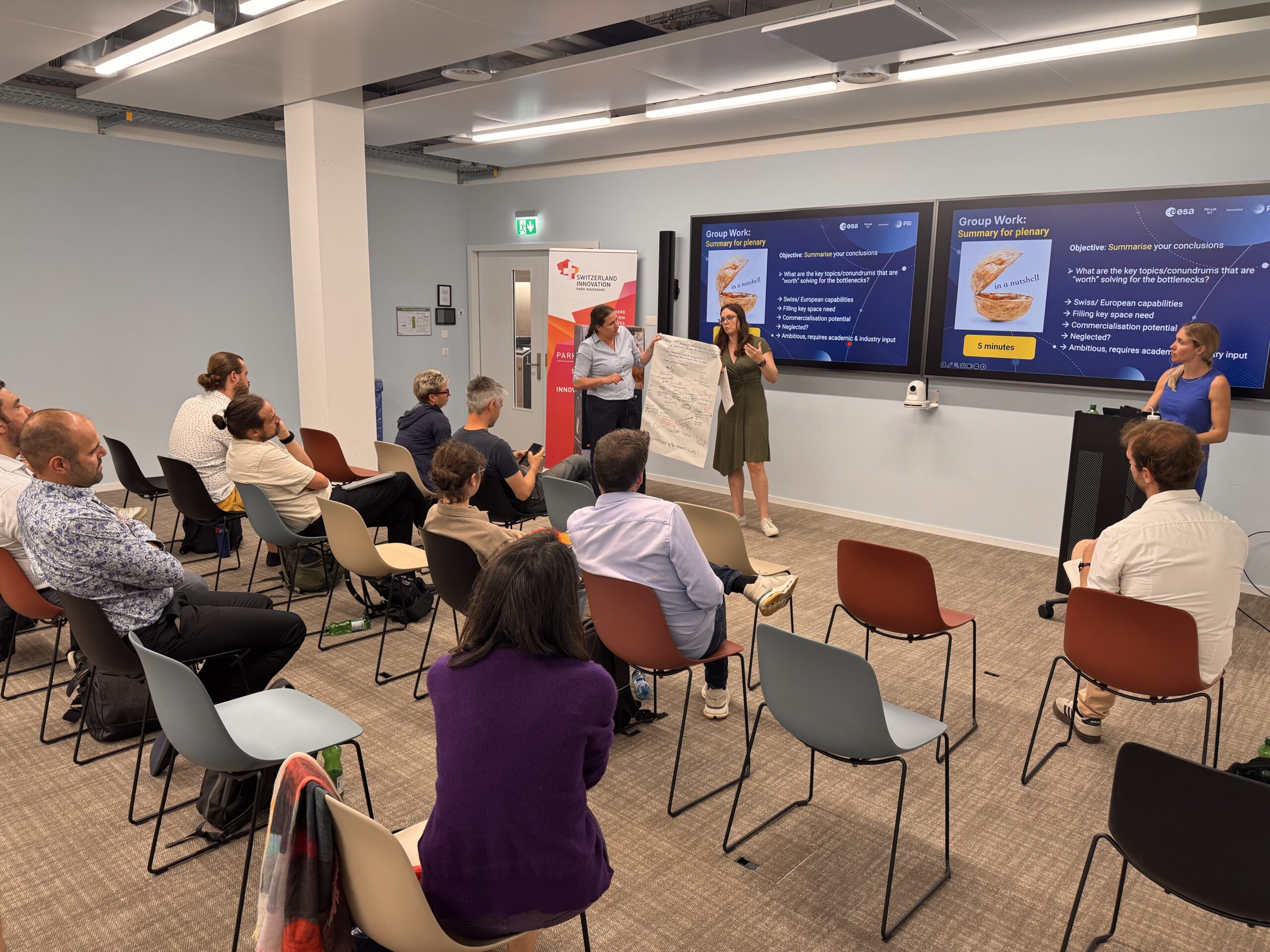
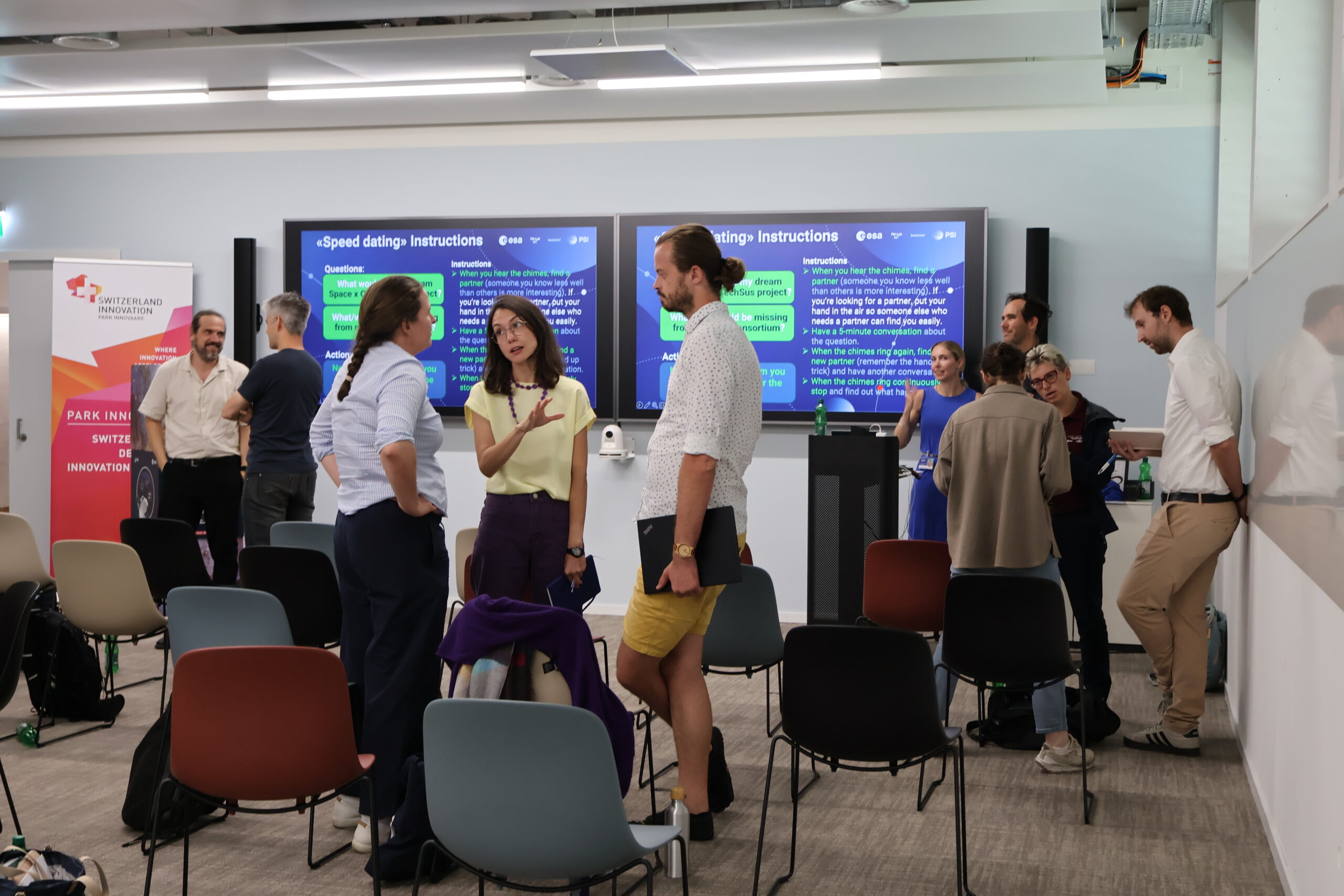
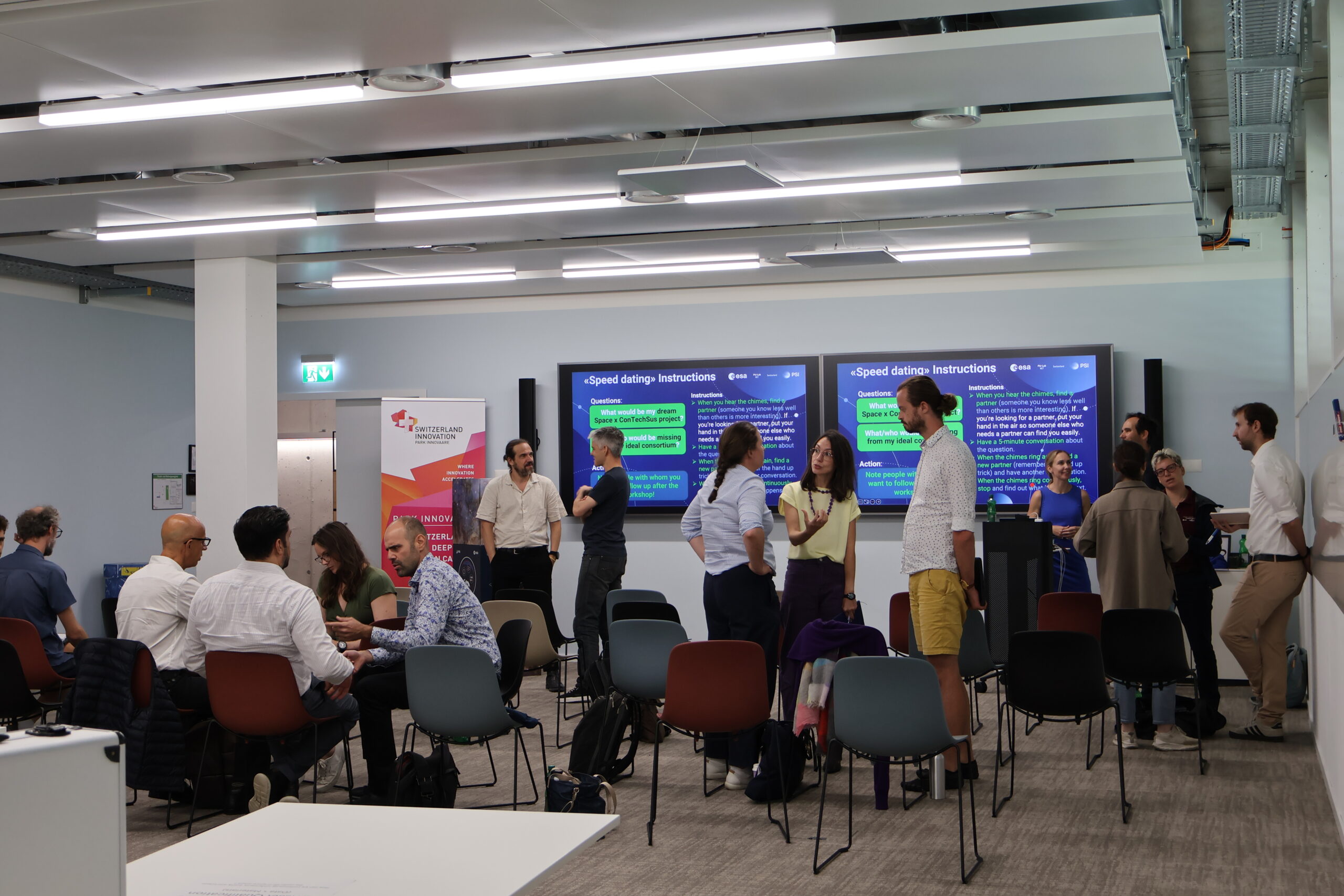
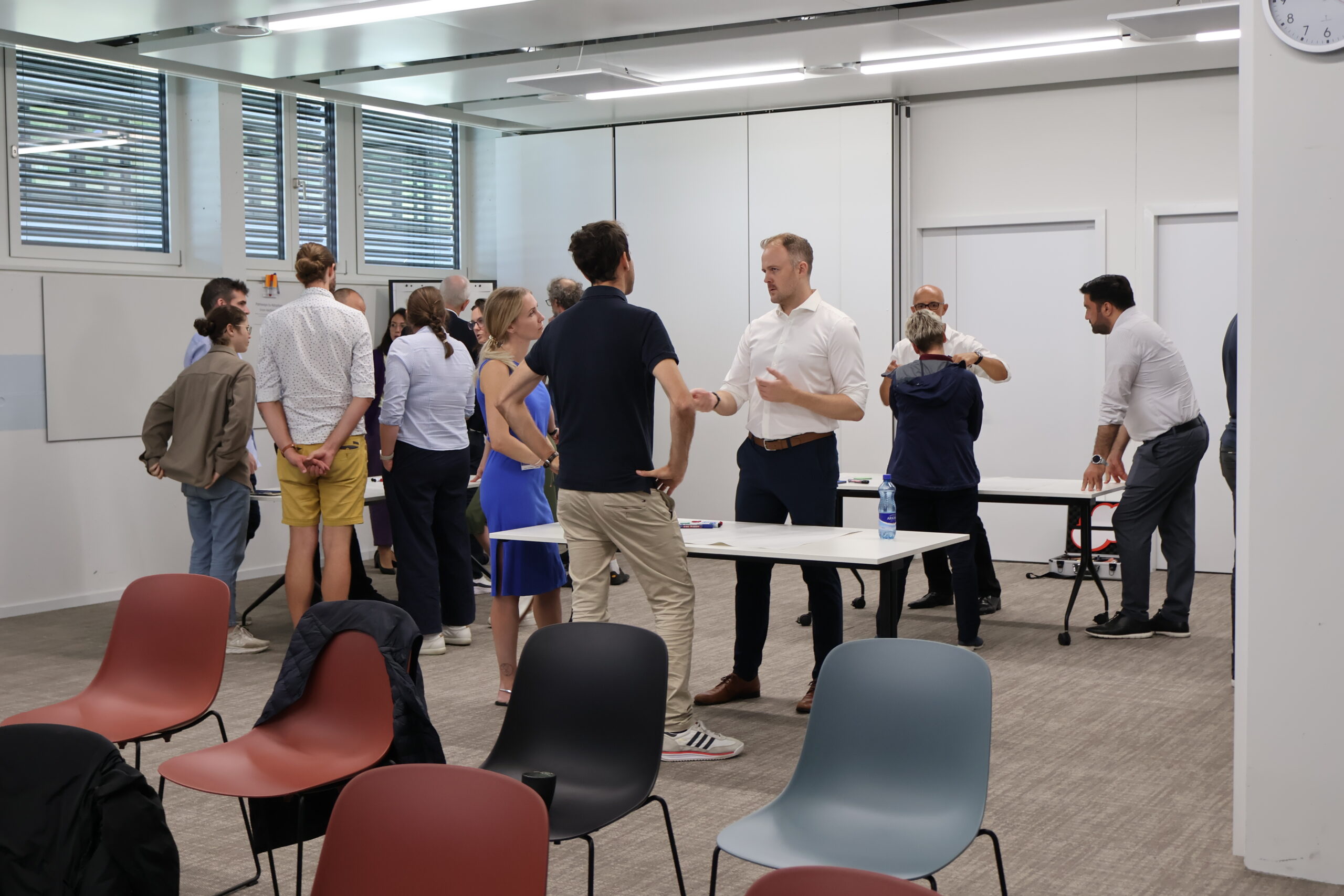
Join us on September 7th for the Sustainability × Data Ideation Workshop at Park Innovaare, where we will refine the next topic of our call, focused on enabling novel solutions for sustainable space through the convergence of Quantum, Materials, and Data.

 07.09.2026 – 13:00 – 16:30
@Park Innovaare, Villigen AG

Register now for the workshop to take part in shaping the next wave of convergence-driven, deep tech sustainability solutions.

Sustainability × Space
Call for Ideas

Technological Conundrums Worth Solving

In collaboration with ESA, the Phi-Lab at ESA’s European Space Deep-Tech Innovation Centre is calling for ideas (not research proposals) for technological challenges or “conundrums” at the intersection of space and sustainability, with a particular emphasis on technology convergence by combining the deep-tech areas Quantum, Materials, and Data.

Technology convergence is the process by which multiple technology domains combine and co-evolve, requiring coordination (integration, orchestration) to produce scalable, system-level solutions and competitive advantage. 

Here, convergence is specifically understood as the integration of technologies with the potential to unlock new commercially viable systems or services.

This Call for Conundrums aims to identify neglected, high-impact, technological bottlenecks that could enable such a step-change in sustainable space systems and resource-efficient mission architectures. We are interested in challenges where at least two of Phi-Lab Switzerland’s three focus areas – Quantum, Materials, and Data – meaningfully intersect.

A strong submission clearly indicates a plausible context of use, the type of commercial service or system that would be unlocked if the constraint is resolved, and why current technology or market structures fail to address it.

We seek upstream and enabling technologies that could make space missions, space infrastructure, and space-related industrial value chains more sustainable, resilient, resource-efficient, circular, repairable, or less dependent on critical resources.

We especially welcome problems that are “crazy but possible”: too complex, too interdisciplinary, or too neglected for conventional funding streams, but potentially transformative if addressed by the right collaborative teams.

By submitting your idea, you can help shape the scope of an upcoming Phi-Lab Switzerland research programme with several million CHF of total available funding, accessible to both academia and industry. Promising inputs may inform future open calls, workshops, and programme priorities.

Organisations from the public and private sectors are invited to participate.

What topics are we interested in?

Sustainability in space is a broad and rapidly growing field. For this reason, the Phi-Lab Switzerland is not seeking generic sustainability concepts, downstream services, or incremental improvements. Instead, we are looking for specific, upstream, technological conundrums that could unlock step-changes in how future space systems are designed, built, operated, maintained, repaired, reused, or decommissioned.

Future missions will need to do more with less: less mass, less power, fewer critical materials, fewer replacement parts, lower failure rates, reduced waste, and more autonomous operation. At the same time, space systems must become more resilient, more adaptable, and more commercially viable across longer mission lifetimes and harsher environments.

Addressing these challenges will require deep integration between disciplines. New materials may need embedded sensing and data-driven qualification. Data systems may need to optimise resource use, predict degradation, or support autonomous repair. Quantum technologies may enable ultra-sensitive monitoring, more efficient navigation, secure communication, or new diagnostic capabilities. Sustainable space technologies may therefore emerge not from one discipline alone, but from the intersection of several.

This Call for Conundrums therefore asks:

What are the neglected, upstream, technological bottlenecks at the intersection of Quantum, Materials, and Data that hold the potential for commercial viability and could make future space systems more sustainable, resource-efficient, resilient, circular, or long-lived?

The future lies in bold combination!

Scope of the Call

We are looking for conundrums that address upstream or enabling technologies for sustainable space systems. Proposed ideas should involve at least two of the following Phi-Lab Switzerland focus areas:

  • Quantum (e.g. quantum sensing, quantum communication, quantum timing, quantum-enabled diagnostics, quantum-enhanced measurement, or quantum technologies that contribute to more efficient, resilient, or sustainable systems)
  • Materials (e.g. advanced materials, processing, manufacturing, circularity, durability, multifunctionality, degradation, repair, replacement of critical materials, sustainable production, or end-of-life considerations)
  • Data (e.g. onboard data handling, autonomous decision-making, digital twins, predictive maintenance, trustworthy data, lifecycle modelling, resource optimisation, qualification data, or mission operations intelligence)


Technology Areas of Interest

We are looking for conundrums in – but not limited to – the following areas:

  • Sustainable and Circular Space Materials
  • Lifetime Extension, Degradation Monitoring, and Predictive Maintenance
  • Resource-Efficient Manufacturing and Qualification
  • In-Space Repair, Reuse, and Adaptation
  • Low-SWaP and Energy-Efficient Mission Systems
  • Sustainable Space Infrastructure Beyond Earth
  • Trustworthy Lifecycle Data for Sustainable Space Systems

… and wherever bold ideas push the frontier.

What we are not looking for

This Call for Conundrums is not focused on downstream applications of space for sustainability. We are therefore not seeking ideas primarily centred on:

  • Earth observation for climate, agriculture, biodiversity, forestry, oceans, or disaster monitoring.
  • Sustainability analytics or reporting platforms based mainly on satellite data.
  • Carbon accounting, ESG dashboards, or environmental monitoring services.
  • General software applications without a clear upstream space technology bottleneck.
  • Incremental improvements to already well-funded or mature technology areas.
  • Concepts that involve only one Phi-Lab focus area without meaningful interdisciplinary integration.

The focus is on enabling technologies for more sustainable space systems, not on using space data to observe sustainability challenges on Earth.

Cartoon globe showing Europe and Africa with bold black outlines on blue oceans and green landmasses

Deep tech developed at ESDI delivers technologies of tomorrow for the world of today, creating bold combinations that will profit both space and terrestrial system

FAQ

Can I request a preliminary check before submitting my application?

To have your proposal reviewed and to assess its viability in relation to the call criteria, please contact Jennifer.wadsworth@psi.ch

The best way to stay updated on ESDI’s open calls and other news is by subscribing to our newsletter and following us on LinkedIn.

Phi-Lab Switzerland has two additional calls planned: one on materials, scheduled for autumn 2025, and another on data, planned for 2026. This list may expand over time. To ensure you never miss an update, we recommend subscribing to our newsletter.

For any inquiries related to intellectual property, equity, or other contractual matters, please contact Markus Schoelmerich at jennifer.wadsworth@psi.ch.

The ESDI team is available to support you with any technical questions you may have. Additionally, we collaborate with partners who possess specific expertise to ensure your questions are answered thoroughly. The first point of contact for technical inquiries is: jennifer.wadsworth@psi.ch

The earliest possible start date (T0) for your project is once the contracts are signed, which we expect to happen by Summer 2025.

Funding overview

For any question according to the funding please check the attached document: ” Funding overview” or check the OSIP webpage or contact: markus.schoelmerich@psi.ch.

Regarding the expected delivery, we don’t necessarily expect a market-ready product at the end, but a path to commercialisation in the future should proposed. While TRL is a useful guide, it’s not the only factor. A project is expected to demonstrate a 10x improvement in compactness, performance, or reliability to transform quantum sensing from laboratory instruments into commercially viable products for applications in space. 

In principle, yes. However, we encourage assembling a consortium with a variety of expertise and skills, ideally from different institutions or sectors, to enhance diversity, which aligns with the goals of the call. 

While small-scale, focused contributions are valuable, the call is primarily structured around full project proposals submitted by consortia. If you are considering a single-lab proposal, we encourage you to position it as part of a broader consortium effort, ideally as a targeted contribution addressing identified needs from the profile-seeking session. You may also consider collaborating with other teams to form or join a consortium where your expertise can be integrated. For this matter we will be happy to put you in contact.  

A collaboration between several laboratories within the same legal entity can still be considered a consortium under the call’s definition, provided that multidisciplinary competences are clearly demonstrated. However, we strongly encourage forming consortia that include partners from different institutions or sectors (e.g., industry, research organizations). This approach aligns with the call’s emphasis on cross-sector innovation and multidisciplinarity. If your proposal remains within a single institution, ensure that the complementary expertise of the labs is well articulated and clearly defined in the proposal. 

Contact us

We appreciate your interest in ESDI. Kindly complete the form, and we will respond to your inquiry promptly. 

For questions related to open calls, please visit the call page on the Open Space Innovation Platform (OSIP).

Join our mailing list to receive the latest news and events from us, delivered straight to your inbox. Registration here!

Dr. Jennifer Wadsworth
Head of Phi-Lab
PSI
Dr. MARKUS SCHOELMERICH
PROGRAM MANAGER
PSI